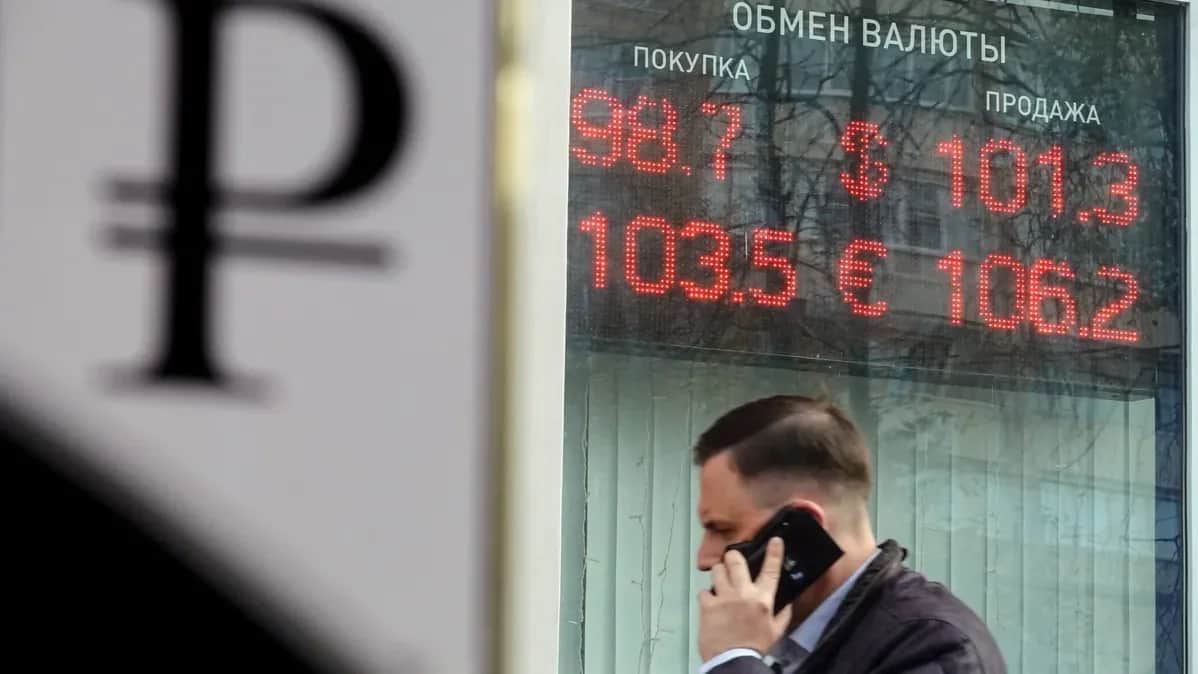
The Kremlin is yet again being forced to take drastic measures to prop up the plummeting value of the Russian ruble. A presidential decree signed on 11 October required the country’s major exporters to convert their foreign revenue into rubles to help prop the currency up, even as the Kremlin spokesperson dismissed concerns about the exchange rate. What’s behind the ruble’s continued fall against the dollar and what implications might it have?
“This decision is more about politics than economics,”
Ruben Enikolopov, an economist and professor at Spain’s Pompeu Fabra University, told Novaya-Europe, adding that it would “have some effect, but not for long”.
Following the ruble’s crash to 120 per dollar in the immediate aftermath of Russia’s invasion of Ukraine, the government imposed similar measures. But the state of the market was very different then, with reduced imports and rising export revenue keeping the ruble afloat. Now the situation is the reverse: imports are on the rise, while oil and gas exports dropped by 34% in the first nine months of this year.
The cost of war
While the ruble’s fragility has been attributed by economists to an array of factors including Russia’s diminishing export revenues and increased business lending, Enikopolov maintains that the country’s war-related budget deficit is the primary driver of the ruble’s devaluation.
In an effort to cover the massive financial cost of the war, Russia has been depleting its foreign reserves and therefore increasing its national debt. This in turn has strained the financial system and led to an erosion of confidence in the national currency.
Another explanation points to the “quality of export earnings”. Due to the transition to paying for Russian exports in rubles, Indian rupees and other national currencies, the flow of hard currencies such as the euro or dollar into Russia has decreased.
The transition to national currencies is partly a forced step in an attempt to avoid sanctions, Enikolopov notes. As a result, hard currencies are increasingly scarce in Russia, while there is an oversupply of rubles both domestically and internationally, and the overall volume of trade on the Russian stock exchange has been reduced. This has led to volatility, when, for instance, a large transaction on the stock exchange can force rates to swing sharply in one direction, economists say.