Fighting for a fantasy
Why Russian authorities are seizing books and forbidding discussion of the past

Those who speak the truth about the past are mortal enemies of Russia’s authorities, just as they were enemies of the Soviet regime. The past legitimises the present.
For example, under Gorbachev, when it became possible to openly doubt everything, even the beneficence of the October Revolution itself, the authorities defended the sacred image of Vladimir Lenin till the very end, not allowing him to be criticised or, to put it in modern words, discredited. And this was internally sensible. If Lenin was a saint, this gave legitimacy to his political descendants — the country’s communist rulers, each of whom, upon exposing the previous leader, immediately declared themselves the successor to Lenin’s cause and announced a return to “Leninist norms”. But Lenin’s true image deprived them of even a semblance of legitimacy.
Communists punished those who spoke the truth about the present as well as the past with executions and labour camps. Not long ago it seemed that this strategy had gone for good. The impression was mistaken.
Today, more and more people are going to prison for “fakes” and “discreditation of the army” — that is, for telling the truth about the present: about the war, about the terrible violence that accompanies it, about the true face of the Russian government. Nor can the truth about the past be spoken anymore — a good example of this is the fate of Memorial.
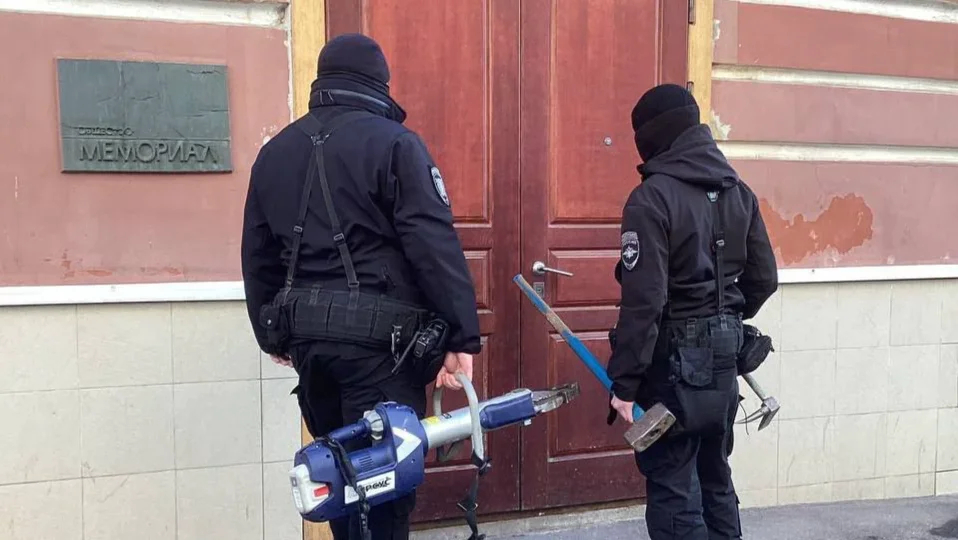
Memorial is not engaged in current politics. It does not expose today’s corruption, make calls to vote, or campaign for or against any political candidates. For more than thirty years, it has simply been telling the truth about what happened in Russia’s past. Yet the government hates Memorial no less than it hates Navalny’s structures. First, the authorities closed Memorial down, and now they are conducting searches and opening criminal cases on the charge of “rehabilitating Nazism”. Given the background of blatantly fascist practices and daily state propaganda of hatred for all living things, this accusation against Memorial sounds particularly amusing.
All of this is appalling, but logical. The authorities cannot win the battle for their preferred fantasy purely with words — they lack the required intelligence, are not accustomed to debate, and the truth is not on their side.
So, they are turning to time-tested methods, so successfully used by their predecessors: bogus trials, prisons, and torture.
How does the fact that, say, Sergey Guriev has been declared a foreign agent — essentially an enemy of the people — change the usefulness of his economic works? He wrote them long before he “sold out to the CIA”, and they suited everyone, teachers and students alike. And why do they withdraw my books from the eighties (!) on the problems of emotional relationships? It is not that I mind — I am even somewhat proud, but it is curious. This would all be hilarious if it were not so terrible: they will not stop, they will continue down this path until their subjects have no questions or doubts at all. There was no invasion of Ukraine, just as there was no partition of Poland and no Novocherkassk massacre.
But one wonders: will the books being seized be burnt? They have not announced it yet, but there must be nowhere to store them. And if they do burn the books, will they do it publicly and involve students? Students of Berlin’s Humboldt University did a pretty good job of it in their time.
Given the level of madness that has gripped the country, seizing books does not even seem that unusual. In Russia, the degree of insanity rises from the bottom of the pyramid, with the highest degree of detachment from reality crowning its top.
High-ranking generals have claimed in all seriousness — I have heard it myself — that there is another planet inside our Earth, its surface also inhabited by people, and that there are contacts between the outer globe and the inner one, and these contacts, just like everything else, are being controlled by Russian intelligence. Now, [Russian Security Council Secretary — translator’s note] Nikolai Patrushev is saying that Russia has saved the USA from collapse twice, but shall not do it again because it would be pointless. And anyway, the USA is ungrateful. And it will soon learn the power of Russia’s wonder weapons. If only someone had told him that “wonder weapons” was exactly the phrase used by the Nazis — at a time when there was already no chance for the Third Reich to survive.
The authorities, of course, do not care about books. But we do. In Berlin, there is a monument to burnt books, set up not far from the spot where they were burned. What we need is a monument to the banned books — the ones that have aroused the hatred of the dictators who have ruled our country for more than a hundred years. One day their reign will end — we do not know when, but they will not last forever. And it is high time to develop and discuss the monument’s design.